




Evidence-based care for lasting health.

Redefining healthcare with personalised, sustainable solutions for weight management and total metabolic health.

  • Explore the science behind our method
  • Understand why we treat obesity as a disease
  • Discover the power of our expert-led approach

Driven by data

We're redefining weight management by treating obesity as the chronic disease it is. Our work combines clinical science with behavioural insight to deliver care that's personalised, evidence-based, and built for lasting health.

The state of obesity

Our understanding of obesity is changing, slowly but measurably. Across the world, the blame narrative is weakening, medical understanding is rising, and public confidence in evidence-based treatment is growing. Progress is possible when obesity is recognised as a disease, not a personal failure.

But progress is fragile. Many people still frame obesity as a personal choice, stigma remains one of the biggest barriers to care, and uncertainty is replacing outright denial rather than resolving it.

Read more about obesity as a disease →
Understanding obesity

The science

In a 90-day study of 2,366 people, those combining weight loss medication with personalised coaching and digital support lost more weight than those using medication alone. Average weight loss reached 11.3% with full programme support, compared with 7.5% without it.

The results point to the value of integrated, clinician-led care, and continue to shape how we design long-term obesity treatment at Leanifi.

Clinical research outcomes
Medication with digital support

When medication meets support

When outcomes were reviewed for more than 18,000 people on GLP-1 treatment, those who stayed connected to their care through a digital programme consistently lost more weight than those who were less engaged. By nine months, people who regularly used the app, checked in with a health coach, or tracked their progress had lost around 21% of their body weight, compared with 16.6%among those who didn't.

This reinforces that ongoing clinical support and practical behaviour-change tools alongside treatment help people get more from it, making progress easier to maintain over time.

Improving public perception of obesity

Improving public perception of obesity

Obesity is still widely misunderstood. Many people see it as a matter of personal choice, with little recognition of the roles played by biology, genetics, or environment, and those views are closely linked to scepticism about medical treatment.

When obesity is framed as willpower alone, stigma follows and people delay care. Changing that narrative is essential if evidence-based treatment is to reach the people who need it.

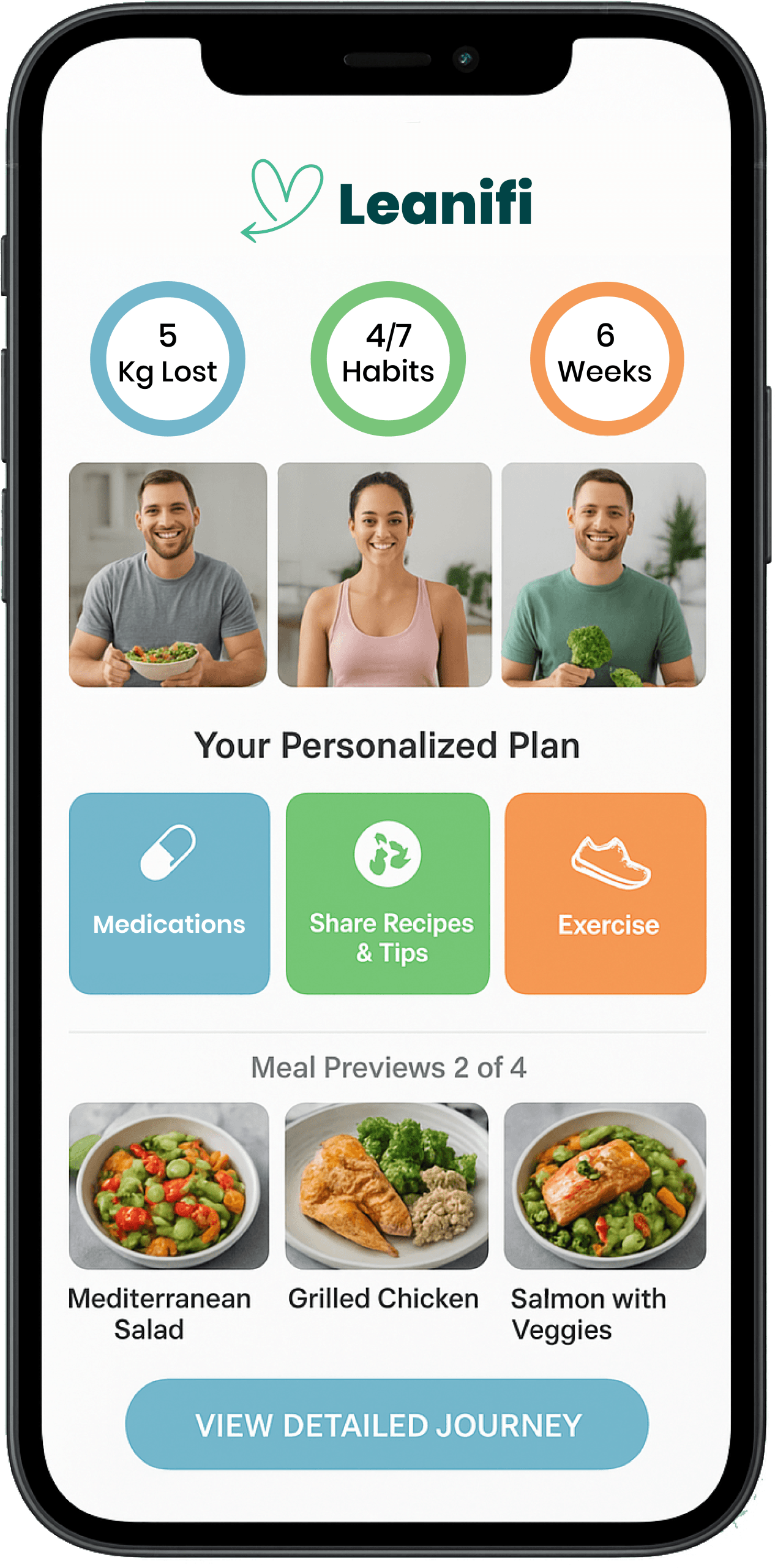
Human support for weight loss

Human support is a necessity for weight loss

As GLP-1 medications become more common, research suggests the prescription alone isn't enough. Patients most often ask about plateaus, side effects, and dose changes, and just as often need help with motivation, emotional eating, and staying consistent.

Effective obesity care depends on personalised, human support to help people manage both the medication and the realities of long-term change.

Augmenting care with AI

People using GLP-1 medication alongside a digital programme often use AI support for quick, practical guidance, especially around day-to-day questions on food, movement, and routines. It offers immediate answers, helping people stay on track without needing to wait for an appointment.

Health coaches play a more personal role. Patients turn to them for reassurance, motivation, and tailored advice when weight loss feels challenging. Many use both together, with AI supporting day-to-day decisions and coaches providing longer-term support, accountability, and human understanding.

Leanifi app AI support
Turning down food noise

Turning down food noise

In real-world evaluations of people using anti-obesity medication alongside a digital behavioural programme, many reported a noticeable drop in “food noise”: the constant, intrusive thoughts about food that can make weight management exhausting. Around 70% saw improvements, with the number experiencing the most severe symptoms reduced by half.

When medication is paired with structured digital and behavioural support, it appears to lessen the mental load around food. For many, that shift helps restore a sense of control over eating and makes long-term change feel more manageable.

Start your treatment journey

Answer a few simple questions to get evidence-based care built around you.

Backed by science

Clinically-proven treatments with coaching that improves outcomes.

Get started →